

There are ingredients that announce themselves — bold spices, bright citrus, the unmistakable warmth of ginger. And then there are the quiet ones. The ones working steadily in the background, doing something meaningful without any fanfare.
Valerian root is one of those ingredients.
You might not have heard much about it. It doesn't trend the way adaptogens do, and it doesn't have the cultural visibility of chamomile or peppermint. But valerian has been used for centuries — across Indigenous traditions, European herbal medicine, and traditional Asian practices — as a trusted ally for the nervous system. And if you have ever struggled to wind down at the end of a long day, it might be exactly what your body has been asking for.
What Is Valerian Root?
Valerian (Valeriana officinalis) is a flowering plant whose roots have been used medicinally for over two thousand years. Historically, it was used to support sleep, ease anxiety, and calm the nervous system — and modern research is beginning to catch up to what traditional healers already understood.
The plant contains compounds — including valerenic acid and a range of antioxidants — that are believed to interact with GABA receptors in the brain. GABA (gamma-aminobutyric acid) is a neurotransmitter that helps regulate nerve activity. When GABA levels are low or out of balance, the nervous system can stay in a heightened state: restless, alert, unable to settle. Valerian helps support the conditions the body needs to shift out of that state and into something calmer.
It is not a sedative in the dramatic sense. It does not knock you out. It is gentler than that — more like giving your nervous system permission to let go.

What It Can Do for Your Body
Sleep support. This is what valerian is perhaps best known for. Many people find that incorporating valerian into their evening routine helps them fall asleep more easily and wake feeling more rested. It works best as a consistent practice rather than a one-time remedy — something to build into your wind-down ritual over time.
Stress and anxiety relief. Valerian has traditionally been used not just for sleep but for daytime stress as well. Its calming properties can help take the edge off anxious feelings, reduce tension in the body, and support a steadier emotional baseline — particularly on days that ask a lot of you.
Nervous system regulation. Beyond any single benefit, valerian contributes to something more foundational: a more regulated nervous system. When our nervous systems are chronically overstimulated — which many of ours are — small, consistent practices that support calm become genuinely valuable. Valerian is one of those practices.
What It Can Do for Your Mind
The mind-body connection is not a metaphor. When the nervous system calms, thinking tends to follow. Many people who incorporate valerian regularly report that it is not just sleep that improves — it is also their ability to focus during the day, to feel less reactive, and to process stress without being overwhelmed by it.
Rest is one of the most underrated cognitive tools we have. When we sleep well and carry less tension through our waking hours, we think more clearly, feel more present, and respond to our lives rather than react to them.
Valerian supports that. Quietly, consistently, without drama.
How We Use It at Kebaonish
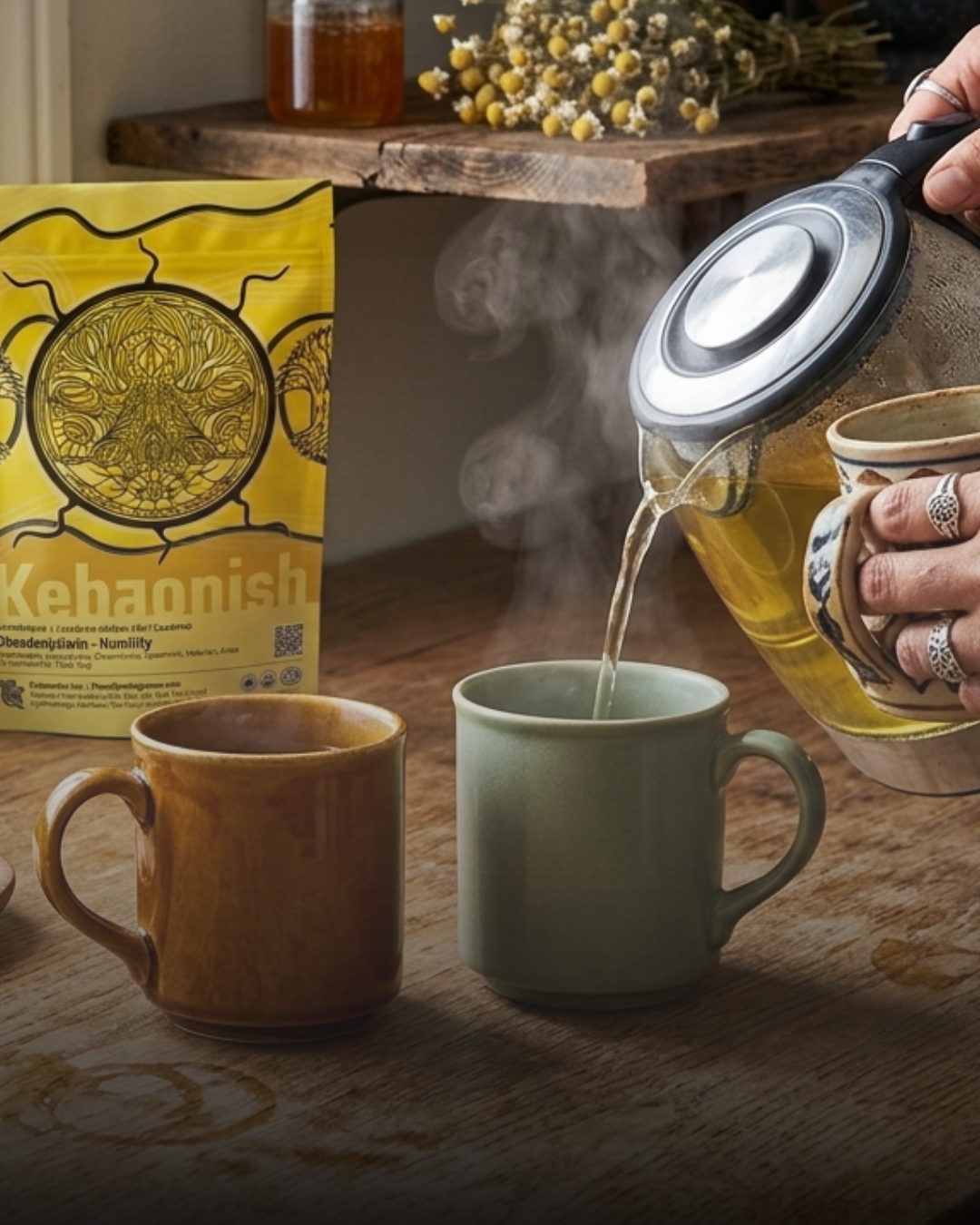
At Kebaonish, valerian root is one of the key ingredients in our Humility (Dbaadendziwin) Tea — a blend inspired by one of the Seven Grandfather Teachings of the Anishinaabe.
Humility, in this tradition, is not self-diminishment. It is the practice of recognising your place within a larger whole — approaching life with reverence, listening more than speaking, and acknowledging that you are one part of an interconnected web of beings. There is something deeply fitting about anchoring this teaching in a blend whose central ingredient asks the body to release, soften, and surrender to rest.
The Humility blend combines valerian with lemongrass, chamomile, spearmint, and anise — each ingredient adding its own quiet contribution. Lemongrass brings citrus brightness and antioxidants. Chamomile offers its well-known gentle sedative quality, relaxing without heaviness. Spearmint adds a touch of coolness that soothes both digestion and tension. And anise lends natural sweetness while supporting the nervous system and aiding digestion.
Together, they create a tea that is soothing, fruity, and lightly refreshing — a cup that feels like a genuine exhale.
No caffeine. No artificial flavours. Just plants doing what plants do best.

When to Drink It
The Humility Tea is particularly well-suited for:
Evening wind-down. Brew a cup about an hour before bed as part of a deliberate transition out of the day. The ritual of making tea — the warmth, the scent, the pause — is itself a signal to the nervous system that the day is ending.
Moments of overwhelm. On difficult days, when the mind is running faster than it should, a cup of Humility Tea can serve as an anchor — a small, intentional act of care in the middle of the noise.
Afternoon transitions. If your afternoons tend toward restlessness or that mid-afternoon mental fog, a caffeine-free herbal cup can help reset without disrupting your sleep later.
A Different Way of Thinking About Wellness
At Kebaonish, we believe that wellness is not always loud. It does not always look like a transformation or a breakthrough. Sometimes it looks like a quieter cup at the end of the day. A more rested morning. A nervous system that has a little more room to breathe.
The quiet ingredients matter. They are often the ones doing the most important work.
If you have not yet tried our Humility Tea, this is your invitation.
→ Shop the Chamomile + Valerian Humility Tea
→ Explore the full Kebaonish tea collection
Share:
The Wisdom of Reflection: Finding Kindness in Ourselves and the Natural World
Kebaonish Launches Give Back Summer Campaign in Partnership with Kebaowek First Nation